A guide for the weeks after a house fire
Fire damage cleanup in Centennial, in the order it happens
Board-up, debris, soot, smoke odor, water from the hoses, then the rebuild. Each step below starts the day the engines pull away from your house.
Draft preview. This site is a draft preview. No phone line or request form is connected yet. No business is named here because none has been verified.
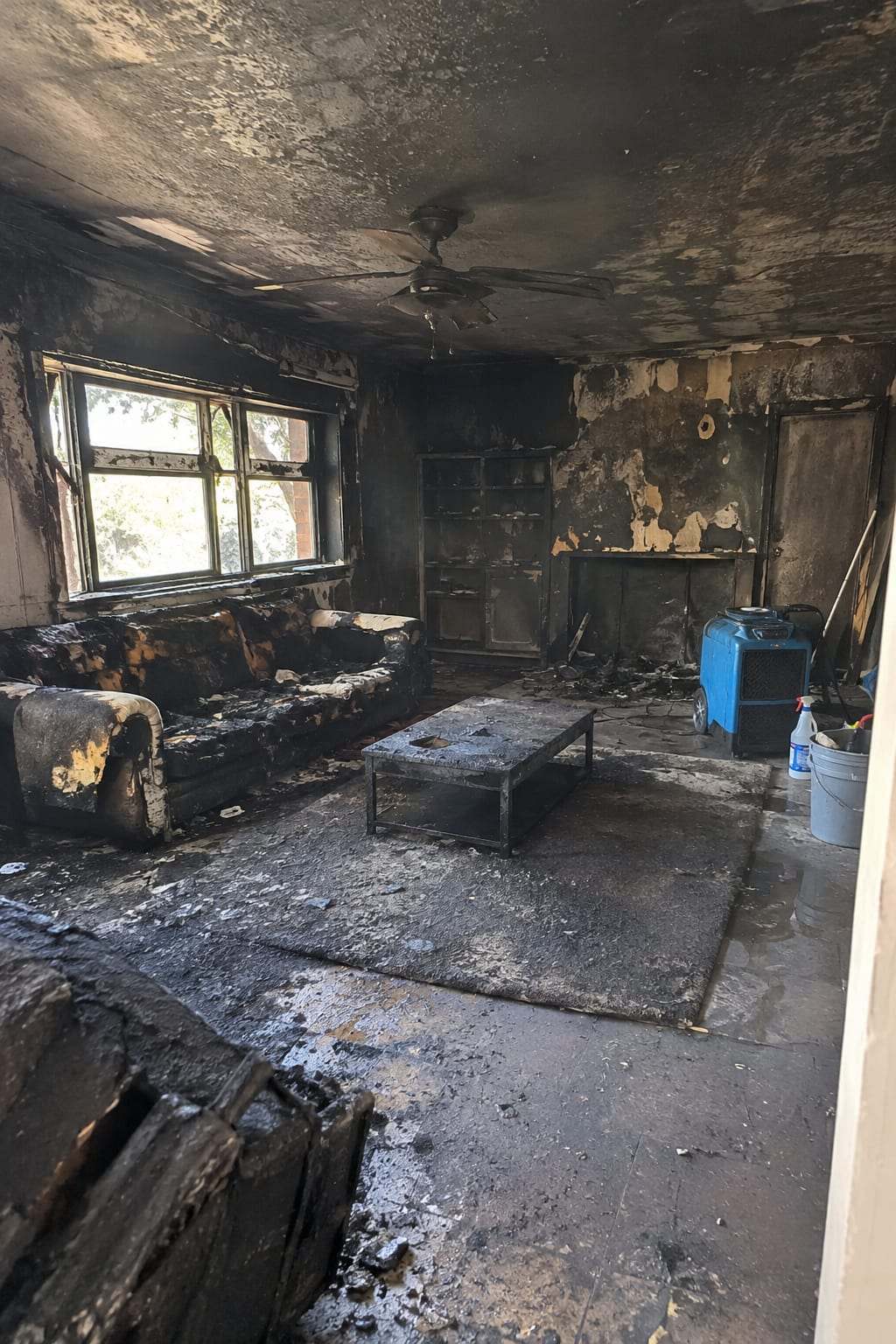
The fire stopped. The damage kept moving.
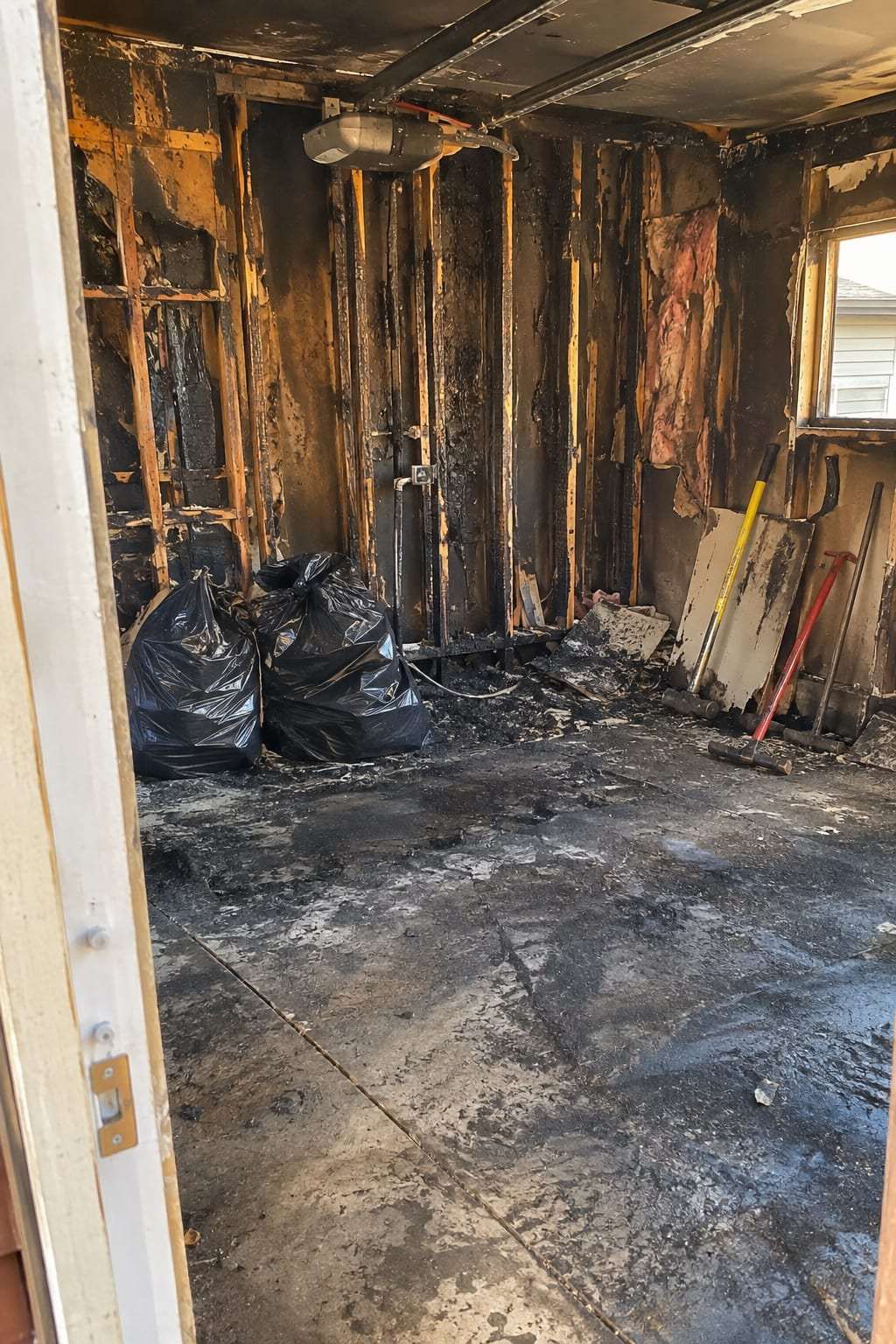
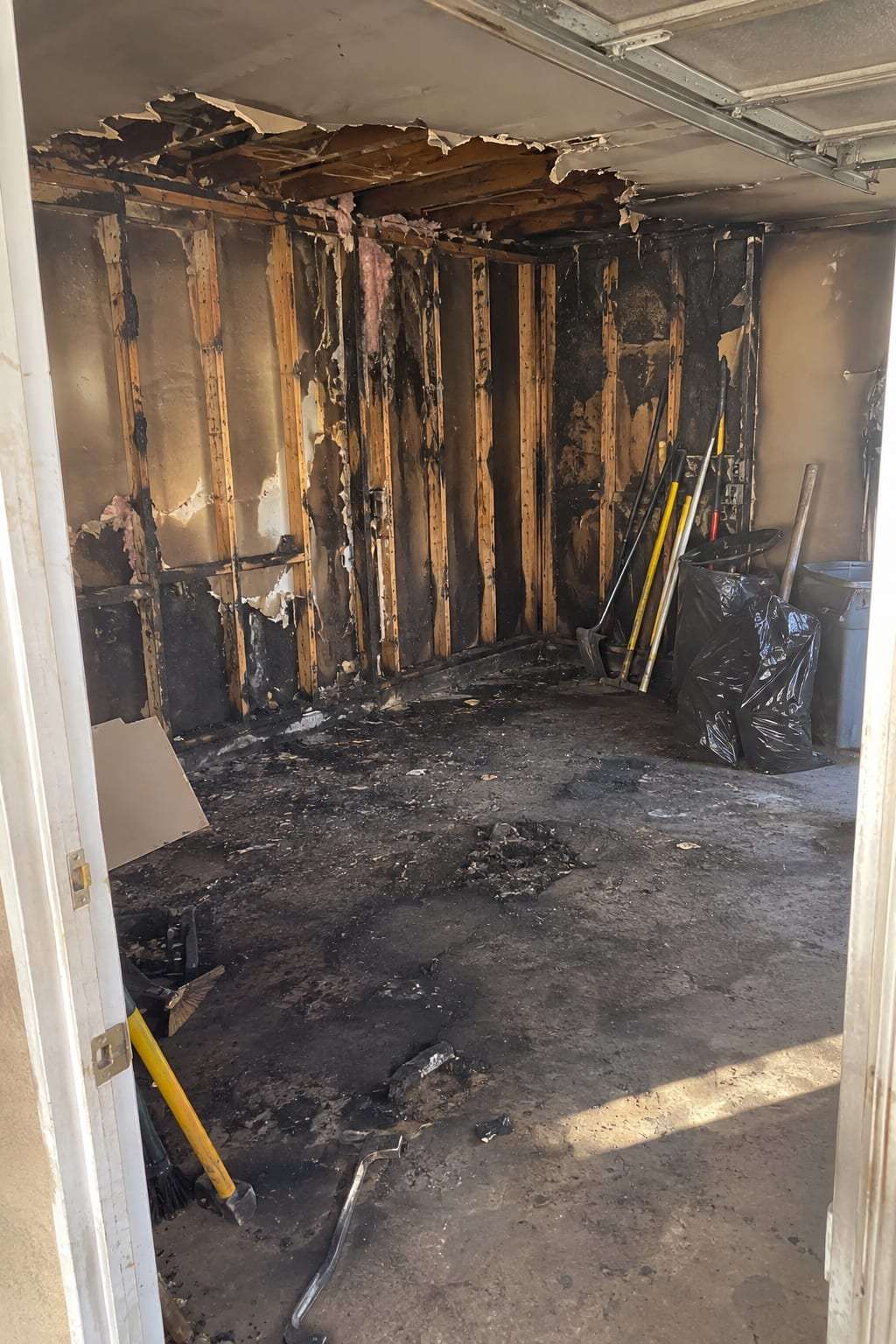
A grease fire that burned for four minutes can still put soot inside the bedroom closets upstairs. Smoke rides the furnace return, settles in ductwork and attic insulation, and leaves an acidic film that etches chrome and yellows paint within days. The hose water goes the other way: down through the subfloor into a finished basement the flames never touched.
So the cleanup runs in a fixed order. Secure the shell. Pull out what can't be saved. Clean soot off what can. Treat odor where it lives, dry the water, then rebuild. Ask for photos and an itemized scope at each stage, because your adjuster will want both.
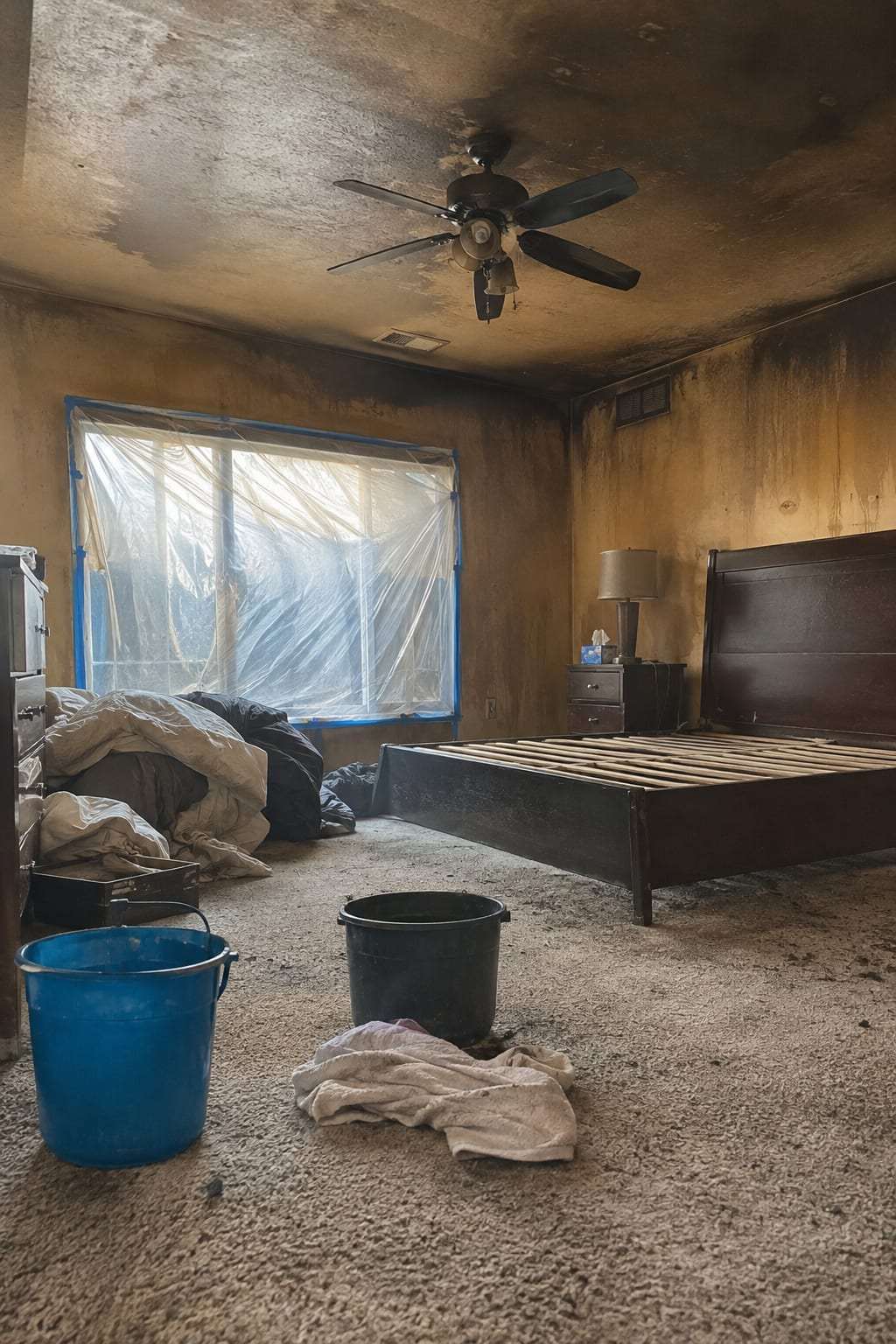
How smoke leaves the room it started in
- The room that burned Charring, melted fixtures, the heaviest soot.
- The return-air grille The furnace pulls smoky air in while the fire is still going.
- Ducts and the furnace Soot coats the supply runs and the blower.
- Bedrooms and closets Every supply register breathes residue back out.
- Attic and basement Smoke rises into the insulation. Hose water sinks to the floor below.
Three soots, three cleaning methods
The residue decides the method. Pick the wrong one and the stain sets for good, which is why a restorer names the soot room by room before anyone cleans.
Dry soot
Fast, hot fires in paper and wood. Powdery. It vacuums up, but a damp cloth smears it into the paint.
Wet, oily soot
Smoldering fires and burning plastic. Sticky, smeared, hard to lift and heavy on smell.
Protein residue
A pot burned dry. A near-invisible film that yellows paint and holds a smell for weeks.
- Dry, powdery soot from a fast, hot fire. It spreads the moment someone wipes it.
- Oily, smeared residue from a smoldering fire or burning plastic. Harder to lift, stronger smell.
- Protein film from a burned pot. You can barely see it, and the odor lingers for weeks.
- Hose water in rooms the fire never reached, often the floor below.
- Smoke odor packed into ductwork, attic insulation and wall cavities.
Five stages, and the order matters
Paint over smoky drywall and the smell comes back in August. Close a wall before the studs are clean and someone opens it again. Run the stages in sequence and each one only happens once.
-
Secure the shell
Plywood over broken windows and doors, a tarp over the roof hole. Weather and trespassers stay out while the claim gets started.
-
Assess and document
Someone walks every room, names the soot type in each, checks the framing and traces the hose water. Photos go to your adjuster.
-
Clear debris and contents
Charred drywall, carpet and furniture come out. Belongings worth saving get inventoried and packed out for cleaning.
-
Clean and deodorize
Each surface gets the method its residue calls for. Odor gets treated at the source, which usually includes the furnace and ducts.
-
Rebuild
Framing, wiring, drywall, roofing and finish work, then a walkthrough with you and a punch list in writing.
Bars show where each stage sits in the job, start to finish. Timing varies from house to house.
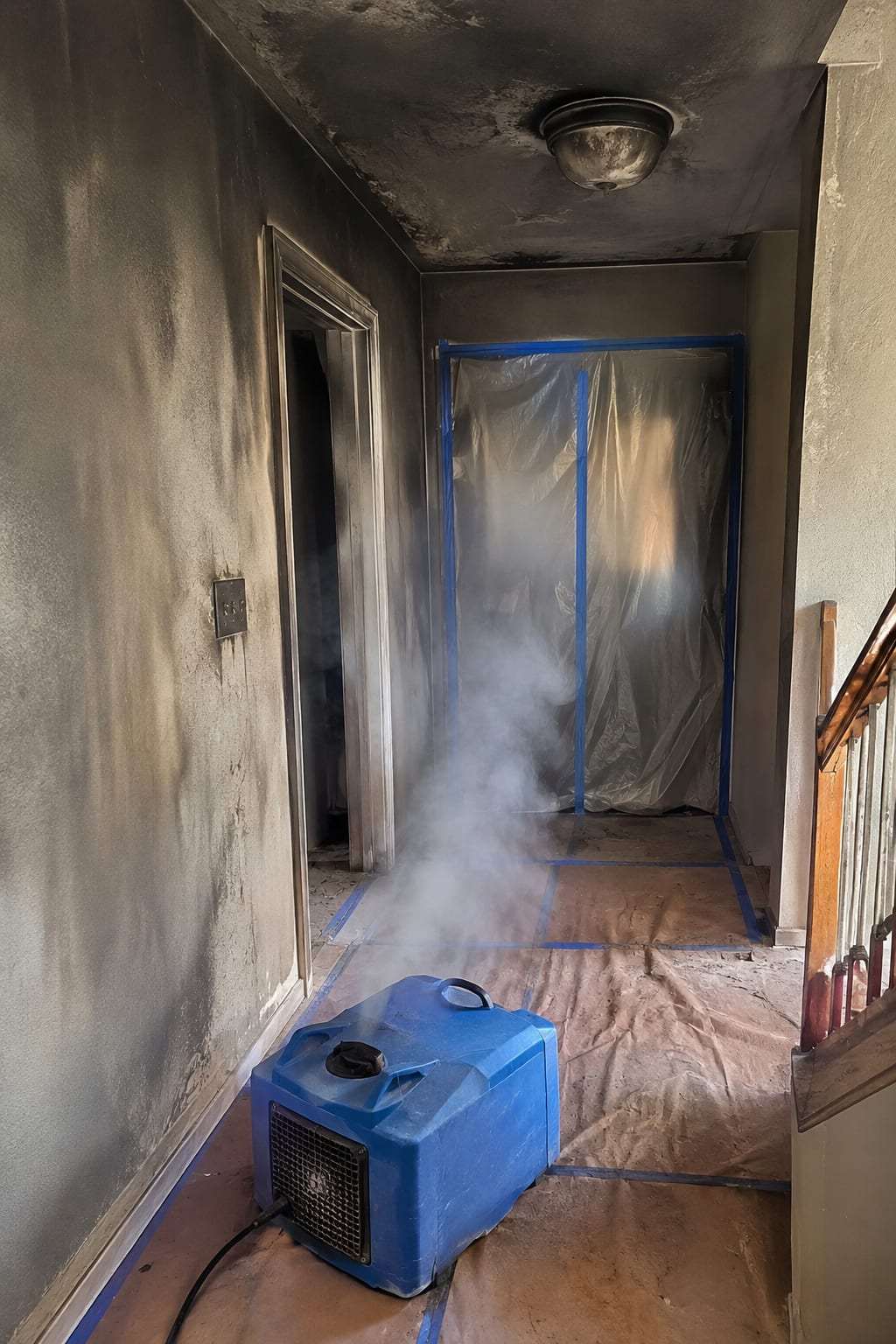
The first day, once the engines leave
-
Stay out until the fire department releases the house. Leave gas and power off until a utility or electrician checks them.
-
Call your insurer the same day. If you can't sleep at home, ask about additional living expenses before you book a hotel.
-
Leave the soot alone. A damp cloth on a smoky wall pushes the stain into the paint.
-
Get broken windows boarded and roof holes tarped before the next storm or the next stranger.
-
Pick a restorer you have checked yourself, and have them assess the house before any demolition starts.
Three questions to put to any restorer before you sign: who answers the phone at 2 a.m., do the technicians hold IICRC fire and smoke certification, and does the same company handle the rebuild?
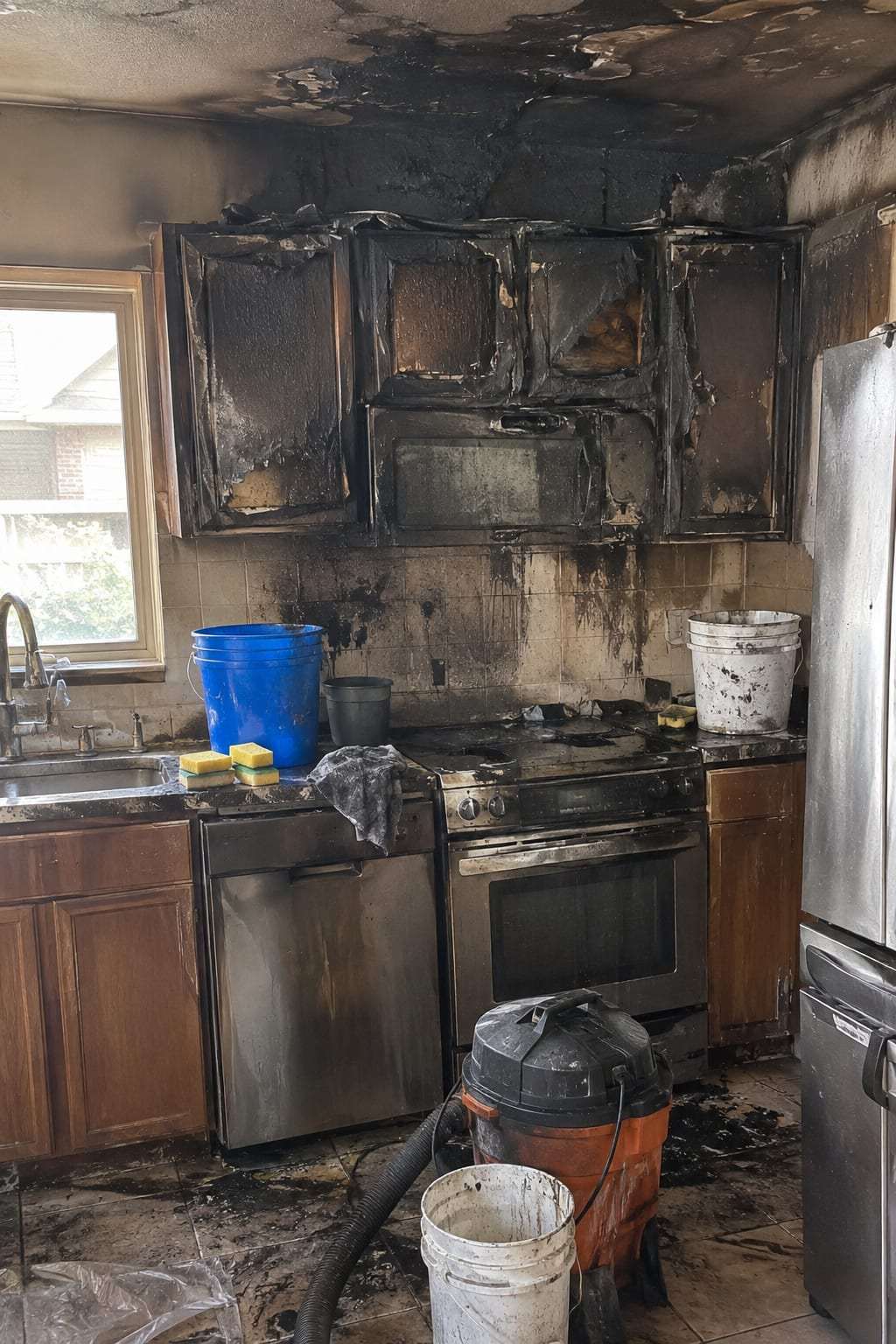
Your belongings take a separate route
After a fire, the house and what's inside it are two jobs. Clothes, dishes, books and furniture often clean up fine, just not inside a house about to lose its drywall. That off-site process is called a pack-out. Ask how it works and get the inventory on paper.
-
Stage 1 of 5
Inventory
Every room's belongings get listed and photographed before anything leaves.
-
Stage 2 of 5
Sort
Each item gets marked clean, store or total loss. You decide on anything sentimental.
-
Stage 3 of 5
Clean
The method matches the material and the soot that landed on it.
-
Stage 4 of 5
Store
Clean items wait off-site while the house gets rebuilt around the empty rooms.
-
Stage 5 of 5
Return
Everything comes back after reconstruction, checked against the original list.
Why a Centennial house burns and smokes the way it does
Centennial became a city in 2001, carved from unincorporated Arapahoe County. Most of its houses went up between the 1970s and the 1990s: two-stories and ranches with attached garages, finished basements and one forced-air furnace moving air through every room. Office parks and retail line I-25 and Arapahoe Road.
That layout shapes the cleanup. The furnace carries smoke to rooms far from the fire, the garage wall is the usual way in, and the basement catches the water. A good assessment follows the smoke's route through the house. Some restorers also handle the rebuild, which spares you from refereeing two contractors. Ask whether yours does.
- Plenty of restorers who work in Centennial, Littleton, Englewood and Aurora drive in from elsewhere in the metro. Ask how long they take to reach you.
- One furnace can push smoke into every bedroom. Ask for the ductwork to be part of the first assessment.
- Additional living expenses coverage can pay for a rental or hotel. Ask your insurer in the first call.
- Ask for references from recent fire and smoke jobs specifically. Water damage work is a different skill.
ZIP codes served: 80112 (Englewood), 80111 (Englewood), 80122 (Littleton), 80121 (Littleton), 80015 (Aurora), 80016 (Aurora).
Also nearby: 80124, 80130, 80237, 80126, 80014, 80231, 80113, 80222, 80120, 80129, 80224.
What to ask before you sign anything
Will my belongings sit in a warehouse for months?
Ask for a written, photographed inventory of every packed-out item, the storage location and a cleaning schedule. Soot keeps working on anything left dirty, so ask when cleaning starts as well as when things come home.
Why would the smoke smell return after cleaning?
Residue left in cavities, insulation or ducts. Ask whether the scope covers the furnace and duct system, and whether the framing gets sealed before new drywall goes up.
How much of my house should be packed out?
Only what needs cleaning, protection during repairs or a line on the claim inventory. Ask what's leaving and why, one room at a time.
How can I judge the quality of the rebuild?
Ask who inspects the work, which permits apply and how the punch list gets closed. One company doing both cleanup and rebuild gives you one party to hold accountable. Two companies means each contract has to spell out who owns what.
How do I keep the claim moving?
Keep every receipt for living expenses and a running list of damaged items. Ask the restorer for an itemized structural estimate your adjuster can read; many carriers use Xactimate. Living-expense decisions belong to your insurer.
What a first call with a restorer usually covers
Expect three questions: has the fire department released the house, are the utilities on, and which rooms took damage. Board-up and tarping come first, then the assessment. Sign for emergency work only until you have a written scope for cleanup and rebuild in hand.
Guides and checklists
Soot, smoke odor, belongings and the rebuild, one topic at a time.
- Guides
Each guide takes one problem that turns up after a fire in the 1970s to 1990s houses that fill most of Centennial.
- Checklists
Print these and write on them.
- Neighborhoods
A late-1960s ranch in Southglenn, a 1990s two-story near Piney Creek and a flex warehouse in Dove Valley each burn, smoke and get rebuilt their own way.
If the fire was yours
Wait for the fire department to release the house. Call your insurer, photograph every room and get the openings secured. Then choose a restorer you have checked yourself and ask for each stage in writing before it starts. For any danger, call 911.
Describe the fire damage
This form is not connected. This website is a draft preview: no business has been confirmed to receive requests, so the fields below are switched off and nothing can be sent. In an emergency, call 911.
Frequently asked questions
Is it safe to stay in a house with smoke damage?
It depends on how far the damage reaches, whether the utilities are safe and who lives there. Soot irritates lungs, so anyone with asthma, a baby or an older parent in the house should be careful. If you're unsure, stay elsewhere until cleanup finishes and ask your insurer about living-expense coverage.
Can smoke-damaged furniture and clothing be cleaned?
A lot of it can. Hard goods usually clean up, and most fabrics survive laundering or dry cleaning. Anything charred, melted or soaked through with oily residue may be a loss. A written inventory lets you and your adjuster track what was cleaned and what was replaced.
Why does the smoke smell keep coming back?
Residue is still sitting in something porous: insulation, a wall cavity, a duct run. Warm, humid days release it again. Air fresheners cover it for an afternoon. Cleaning or removing the source ends it.
Should I clean the soot myself?
A dry chemical sponge can lift light, dry soot from a hard surface. Water and household cleaners tend to smear it deeper. If you have to touch it, wear gloves and a fitted respirator, and leave whole rooms to a professional.
Will my walls need to be repainted or replaced?
Lightly sooted walls can often be cleaned, sealed and repainted. Walls that are charred, soaked from the hoses or holding odor deep in the drywall usually come out.
What is board-up and why does it matter?
Board-up means plywood over broken windows and doors and a tarp over roof openings. It keeps out weather and trespassers, and insurers expect owners to take reasonable steps to stop further damage.
Should I wipe soot off the walls myself?
Better not. A damp cloth pushes dry soot into the paint and spreads oily soot wider. Professional cleaning starts with dry methods chosen for the soot type in that room.